How you’ll develop your property is impacted by your circumstances.
Pick a Scenario
Let’s start with a simple question that will have a big impact on how you build. Are you hoping to convert a home you already own or are you looking to buy?
Scroll to the “I already own a home” or “I am looking to buy” sections below.
I already own a home
I am looking to buy
So... You already own a home
This means you are in a great position to start your multiplex project. We have made the video on the right to get you started.
If you already own a home, the next question you need to ask yourself is:
Where will you live when you build?
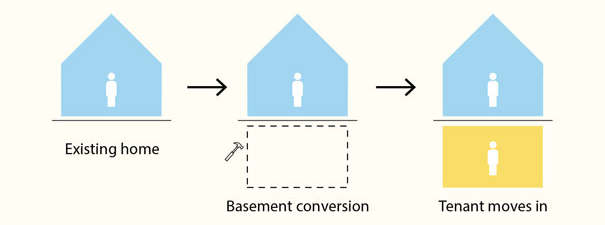
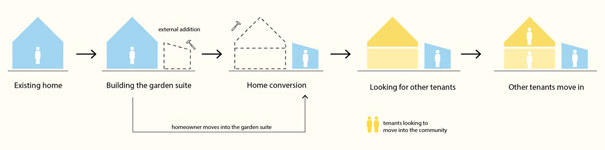
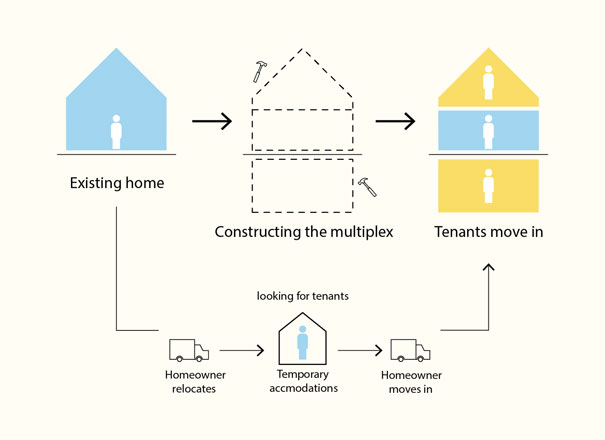
The diagrams below illustrate different scenarios for owners and tenants to live during and after construction.
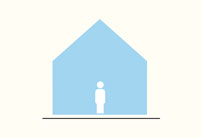
Build Without Moving
If you can keep living in your house while you build extra units then you won’t have to find somewhere to live while you’re building and you can save the cost of renting. Staying in the house while you renovate can cause the construction schedule to be a bit longer. It can also contribute to construction fatigue as it can be challenging to live in a construction zone! It’s a good idea to talk to your contractor about this scenario early on and get their opinion. Some types of renovations are easier to live through than others.
Build, Move, Build
In this scenario, you can build a new unit on your lot, move into it, and then renovate the original space. This also means you will not have to move while you build, but it can cost more and can take a long time. This scenario allows you to stay on your property without having to pay for rent elsewhere or having to live in a house under construction.
Move and Build
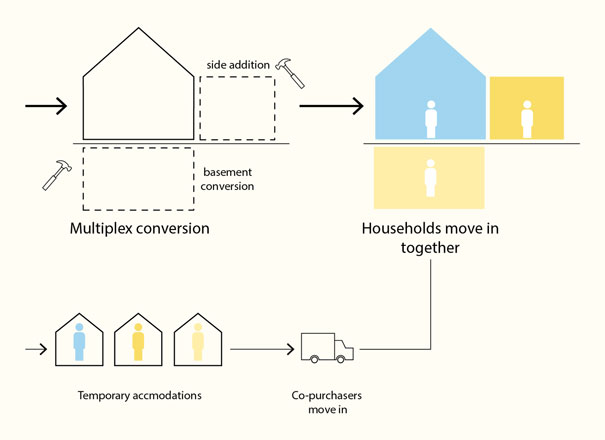
In this scenario, the homeowner moves into temporary accommodation while the existing property is converted into a multiplex. During construction, you will be looking for tenants to move in when the multiplex is complete. If you choose this scenario you should add your cost to rent elsewhere and any additional insurance to your overall project budget. For more information about all aspects of your project budget, check out our Budget Basics page.
So... you are looking to buy
This is an exciting and life-changing decision! Don’t get disillusioned by the price of home ownership. In today’s expensive housing market, people are finding inventive ways to access the housing market. To get you started we have made this video to introduce you to Co-Purchasing.
Once you decide to buy a home, the next question you need to ask yourself is:
Where will you live when you build?
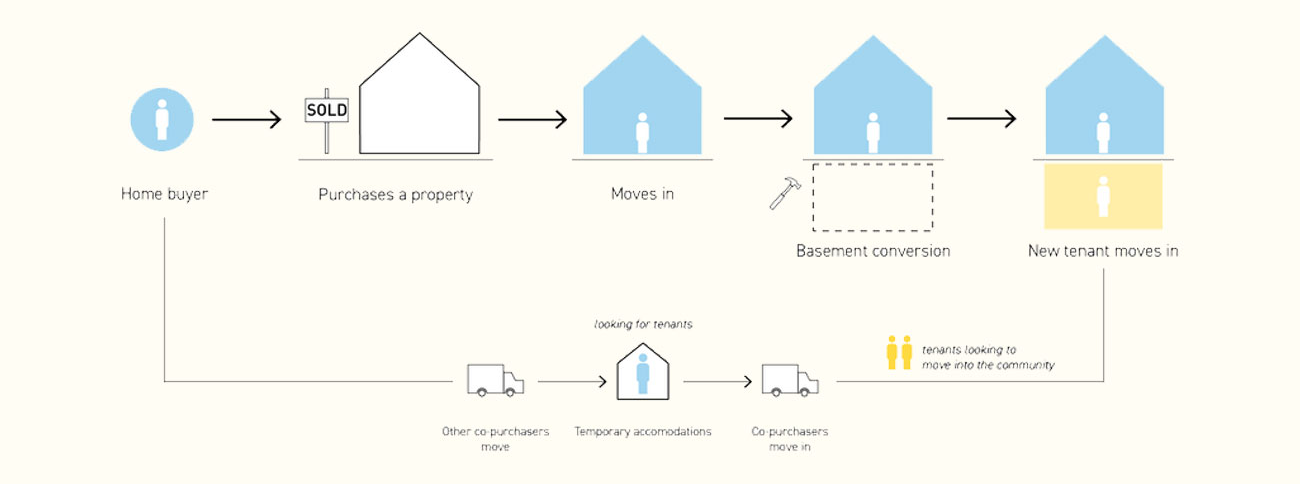
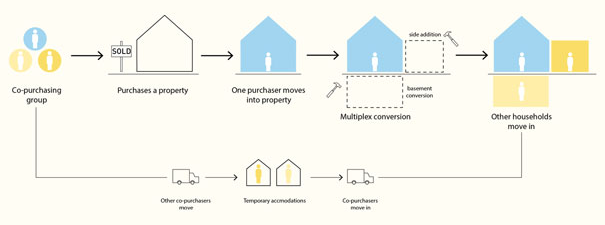
The diagrams below illustrate different scenarios for owners and tenants to live during and after construction.
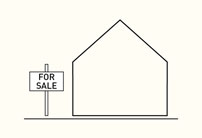
Purchase, Build, Move
If you are buying and are not in a rush to build an extra unit, you can move in and build later. There are a lot of advantages to waiting a year or two before you start. You can find out what you like about your house. It also allows you to plan your design and finances without any financial pressures.
Co-purchasers – One moves in to start
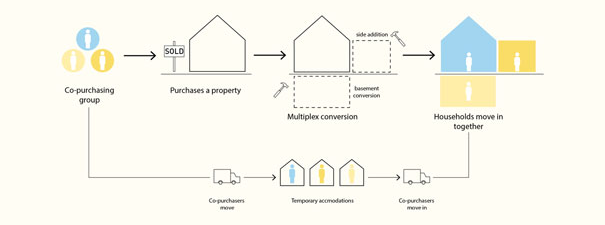
If you are co-purchasing and need to build units for each member of your co-buying group, one member of the group can move in while building the additional units. The others will need to live elsewhere during construction.
Co-purchasers move in together
If building new units to accommodate all the co-purchasers, you should decide if it is optimal for all the owners to live elsewhere to get the construction done faster.
For each of these last two options, you should add your cost to rent elsewhere and any additional costs, such as insurance, into your project budget so you can capture the true cost of this project! For more information about all aspects of your project budget, check out our Budget Basics page.